


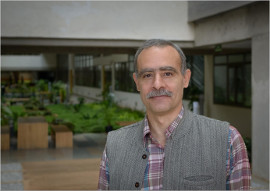
Prof. Upinder S. Bhalla
Computational and Experimental approaches to Memory and Plasticity
When we remember things, we activate an extensive array of events in the brain. Sensory input triggers whole-brain activity, which cascades through networks of brain cells. A torrent of electrical and chemical signals is launched in each cell, giving rise to changes in structures and connections between cells.
We have four major ongoing projects:
- A synaptic atlas to exhaustively map and model synaptic signaling in memory, aging, and disease.
- Informatics and analysis of neuropsychiatric disorders using the CALM-Brain data resource, a multimodal brain data resource from Indian patients.
- Sequential computation in the brain, focussing on time cells in the hippocampus and how salient events are organized.
- Whole human (and primate) brain imaging using ultrasound
1. We are developing a synaptic signaling atlas using high-throughput mass-spectrometry, kinomics, and fluorescence data to measure the time-course of responses of thousands of proteins following stimulation. We also deploy AI to digest the literature and add to an open database of annotated, computer-executable experiment definitions: FindSimWeb. In silico, we model neural computations across scales. We build a range of models of synapses in health and disease using an array of tools we have developed to manage, access, and analyze the data. We use the data and models to examine what processes underlie the overlapping cell and network dysfunction in aging, psychiatric disease, and neurodevelopmental disorders.
2. To ask how these signalling phenomena lead to system-wide function and disorders, we participate in the activities of the Centre for Brain and Mind (CBM). We provide the informatics platform for the CALM-Brain database which collates the unique multimodal and longitudinal dataset arising from this study. We are analyzing this rich dataset to explore how biomarkers may span the space of neuropsychiatric disorders.
3. A key aspect of memory is the ability to relate events that occur in sequences, such as landmarks, music, movements, or words in a sentence. We study how such sequences are formed during learning, how sequences cause changes in cells and connections, and how molecular and electrical signals encode and sustain memories. In vivo, we use 2-photon imaging of hippocampal activity in mice to see how time is encoded during rhythmic stimuli and separated stimuli. We can literally watch brain activity during learning, to see how sequences in the real world map to sequences in the brain. We find that time is encoded through sequences of activity but is highly dependent on the task demands.
4. We coordinate a consortium of researchers developing methods for ultrasound brain imaging in humans and primates. Our partners are in IIT Madras, NIMHANS and IISc.