














Natural environments around us are changing at unprecedented rates. As wildlands shrink, human populations increase and the temperature escalates, we scramble to understand how the species around us will respond. We hope that such understanding will aid in stewarding species survival in the future. Integral to this stewardship are the fields of ecology and evolution, and I focus on this research interface. I study the processes governing the response of species to environmental history, climatic perturbation and human history in the context of species ecologies, and hence gain a better understanding of their evolution.
In practical terms, my research focuses on revealing the processes that drive patterns of mammalian genetic variation (in the present and the past). I use field-collected samples, assemble molecular genetic data and analyze these data with phylogenetic, phylochronologic, phylogeographic and population genetic inferences. Much of my research over the last few years has focused on the Indian subcontinent because of (1) its geographic setting, representing the intersection of three major biogeographic realms (Palearctic, Africotropical, Indomalayan); (2) its geologically dramatic history, driven by plate tectonics, volcanism and climatic change; (3) its ecologically diverse habitat types from the highest mountains on earth to very dry deserts and tropical forests, including biodiversity hotspots; (4) the presence of Homonins in India for perhaps one million years, and modern humans in relatively high (and ever increasing) densities for about 70,000 years impacting the Indian biota; and finally the fact that (5) virtually nothing is known about patterns of genetic variation in native Indian species, and even less is known about the impact of climate on species in this region in particular.
What drives patterns of diversity in the Indian subcontinent? Debapriyo Chakraborty, Shomita Mukherjee, Samrat Mondol
The geographical partitioning of genetic diversity is driven by relatively recent (~2 million years ago to the present) climatic transitions, migration events, population extinctions, and ecological interactions. In the case of the Indian subcontinent, these patterns of diversity are also driven by relatively recent human impacts on wild habitats. We quantify how these processes have impacted genetic variation in Indian mammals using comparative phylogeographic, demographic and population genetic approaches.
Phylogeography- the study of the distribution of genetic variation across the landscape- provides a framework for interpreting genetic variation within and across species. From studies around the world, we know that very different species can show congruent phylogeographic patterns driven by the biogeographic divides or climate-driven events. Unfortunately, despite its biodiversity, India lacks a phylogeographic paradigm. A priori, we might expect that phylogeographic patterns in the Indian subcontinent will be similar to Africa, with dry-zone species showing isolation-by-distance patterns and wet zone species revealing contraction-expansion dynamics. However, the Indian subcontinent is fundamentally different from Africa in three respects: (1) it is smaller and hence affords less opportunity for isolation-by-distance as well as species richness to accumulate; (2) as far as we currently understand, few genera or families are endemic to India; and (3) the spread of elevational gradients is much greater in India than in Africa. Given the above differences, we expect phylogeographic patterns to be driven by differences/similarities in the ecologies of species.
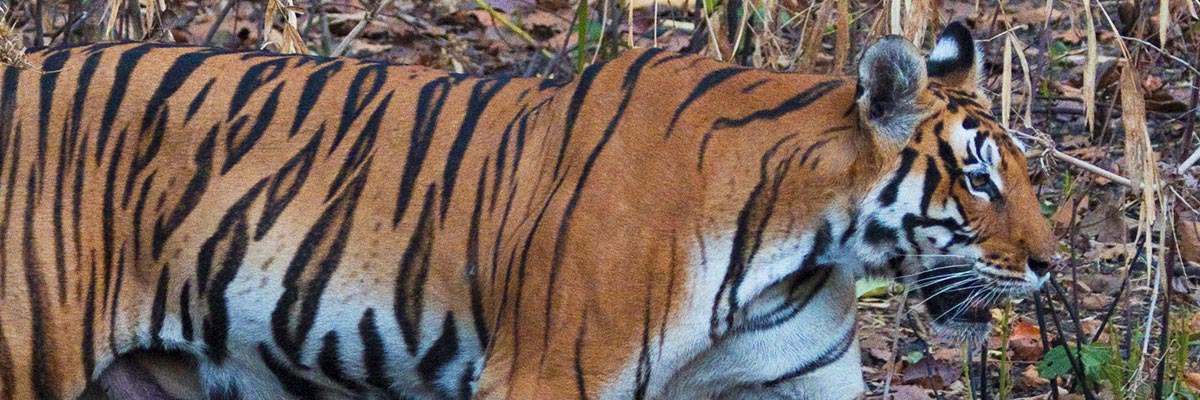
In research over the last few years, we have attempted to test these predictions using a comparative phylogeographic approach. We are using selected mammalian clades in a comparative framework to gain an understanding of what common (if any) geographic features or climatic events drive genetic variation, and how important difference or similarities in species’ ecology are to this process. To date, our results reveal that for sympatric species of large carnivores (leopards and tigers), subdivision patterns of genetic variation across the Indian subcontinent are relatively low indicating high migration rates (Mondol et al. 2009a, Mondol et al. 2009b, Mukherjee et al. 2009, Ramakrishnan et al. in prep.). We do not find any evidence for a biogeographic divide, nor a significant impact of climate, although there was a weak signal of isolation by distance across the continent. Our results also reveal that Indian tigers retain 60-70% of global genetic variability of the species, despite evidence of a relatively recent, potentially human-induced population crash 200 years ago. In the context of worldwide tiger conservation, our data show that Indian populations are a critical lynchpin for the future survival and recovery of the species.
Congruent patterns of genetic variation were also predicted for two similarly sized small native cats with overlapping ranges and life histories. However, we found that jungle cats (Felis chaus) had high genetic variation, low population structure and evidence of population expansion, while leopard cats (Prionailurus bengalensis) revealed lower genetic variation and high population structure between northern and southern populations indicative of limited migration and lower population sizes (Mukherjee et al.b, in review) (Figure 1). Niche-model analyses for leopard cats implicate a climatic barrier in central India that prevents occupancy of this region by this species today, pointing to the importance of small differences in autecology driving phylogeographic patterns. Comparisons between two macaque species, (the bonnet macaque (Macaca radiata) and the Arunachal macaque (Macaca munzala) stark differences in phylogeographic pattern (Chakraborty et al. 2007, Chakraborty et al. in prep) with the Arunachal macque (restricted to high elevations in the Eastern Himalaya) revealing a strong signal of population differentiation while the peninsular bonnet macaque did not.
Thus far, our results from each of these comparisons demonstrate that from a landscape perspective, peninsular India does not present either a historic or present boundary to gene flow and that the more isolated and restricted habitats harbor unique clades of mammals. Climate of the last 2 million years has not significantly affected the genetic diversity of the species we have studied and, from the perspective of the species studied, small differences in species ecology seem to significantly impact their phylogeographic patterns. We will continue to test predictions of (1) strong differentiation in the restricted habitats of the northeast; (2) ecology driving phylogeographic pattern; and (3) no significant impacts of climatic change in the last glacial maxima using other species.
What are the impacts of climate on temporal changes in diversity? Uma Ramakrishnan, Krishnapriya Tamma
Understanding past changes in migration and population size in animal populations that correlate with periods of environmental change provides a framework to predict species’ response to the current, accelerated rates of environmental change. Rarely, we are provided a window into the past with ancient DNA from populations. Although technical methods dealing with degraded DNA samples are well advanced, the analyses of such data are still in their infancy. I developed the first simulation-based methods to analyze temporal genetic data, or ancient DNA, Serial SIMCOAL (Anderson et al., 2005). More recently, I have been developing a novel framework for the analyses of ancient genetic data (Ramakrishnan & Hadly, 2009) that hierarchically considers simple to more complex models, and uses a model-testing approach to investigate the most likely population history. We applied this method to existing ancient genetic datasets to synthesize what we know about population responses to environmental change from paleogenetic studies (Ramakrishnan & Hadly, 2009). I applied these methods to a combined modern and ancient genetic dataset from ground squirrels, Spermophilus armatus (O’Keefe et al., in press), and results revealed that populations at the edge of the range in marginal habitats are sinks for diversity, while more central populations are larger and serve as sources of diversity.
The climatic fluctuations of the Quaternary have played an important role in the organization of animal communities as we see them today. Although we know much about temperate ecosystems, we know very little about the responses of tropical species. We set out to use a Quaternary fossil deposit in peninsular India to better understand climatic responses at low latitudes. We investigated change in the composition of small mammals through time in the Kurnool limestone cave system. Over 300 identifiable jaws from 7 stratigraphic levels representing the middle Pleistocene reveal a relatively stable small mammal community through the time represented by the deposit (Figure 2). Modern field sampling reveals an overall similar small mammal community, with notable deviations due to the presence of human-associated species today (Tamma et al. in prep, Tamma & Ramakrishnan 2009). We are in the process of dating these deposits.
What is the cryptic biodiversity of India and how can we safeguard its future? Samrat Mondol, Shomita Mukherjee
Genetic sequence data can be used as a tool to discover cryptic species and populations. It is also powerful for assigning individual specimens to specific geographic localities. We used molecular genetic tools to investigate the several species from Northeastern India, and these results were highlighted in the earlier NCBS report. Our studies reaffirm the importance of the eastern Himalaya as a biodiversity hotspot and highlight the importance of monitoring and management in this region, which we hope to continue in the next few years.
In many regions of peninsular India, we have a better idea of what species are present, but know very little about how populations persist in the existing, fragmented habitat matrix. For example, do tigers and leopards both depend on regions outside protected areas? If so, do these species regard similar landscape and human features as barriers? How frequently do these large felids coexist and where? Because large carnivores are elusive and rare, genetic surveys of carnivore scats can be used to answer such questions. We developed non-invasive sampling and PCR-based methods to distinguish between tigers and leopards (Mukherjee et al., 2007, Mondol et al., in press). Out of 353 scat samples collected across a 22,400 km2 landscape in the Western Ghats, we assigned species identity to 314 (89% success; 218 leopards, 40 tigers and 58 canids, Figure 3). In collaboration with the Wildlife Conservation Society India, we hope to continue our surveys investigating population connectivity of large carnivores in this critical landscape.
Although India is well known for some of its large carnivores, very little is known about small carnivores. We designed a PCR-RFLP panel for all felids and canids in the Indian subcontinent (Mukherjee et al.a, in review) and tested our methods on fecal DNA from known species and field-collected scats. Our results suggest that leopard cats are more common in the Himalayas, while jungle cats are more abundant in the arid regions of central India. In the future, we hope to use such methods to investigate habitat preferences of small carnivores in the Eastern Himalaya.
Finally, genetic methods can be used to quantify the most basic parameter in ecology and conservation, animal abundance. Just as the stripes on every tiger make it unique, and hence identifiable, a set of microsatellite loci and their genotypes identify it as distinct from other individuals. We developed methods to individually identify tigers from microsatellite loci amplified from fecal DNA (Mondol et al., 2009b). Genetic analyses of scats collected in a mark-recapture framework provided population abundance estimates that were identical to concurrent photographic estimates. These methods are to be incorporated into the upcoming, National Tiger Conservation Authority census.We have also developed methods to individually identify leopards from fecal DNA (Mondol et al., in press) and applied these methods to a non-invasive samples collected in a human-dominated landscape. In the future, we hope to use the leopard and tiger genotypic data we have collected for population assignment of confiscated skins. It is our goal to contribute to the conservation of these species by ascertaining the geographical origins of traded skins.
Positions available!
POSTDOC: POPULATION GENETICS OF WILD POPULATIONS OF MODEL ORGANISMS
A postdoc position is available in the lab of Dr. Uma Ramakrishnan at the Department of Ecology and Evolution at the National Centre for Biological Sciences, TIFR, Bangalore, India.
We are interested in the processes governing the response of species to environmental history, climatic perturbation and human history in the context of species ecologies, to gain a better understanding of their evolution. In practical terms, our research focuses on revealing the processes that drive patterns of mammalian genetic variation (in the present and the past). We use field-collected samples, assemble molecular genetic data and analyze these data with phylogenetic, phylochronologic, phylogeographic and population genetic inferences. Much of our research over the last few years has focused on the Indian subcontinent because of (1) its geographic setting, representing the intersection of three major biogeographic realms (Palearctic, Africotropical, Indomalayan); (2) its geologically dramatic history, driven by plate tectonics, volcanism and climatic change; (3) its ecologically diverse habitat types from the highest mountains on earth to very dry deserts and tropical forests, including biodiversity hotspots; (4) the presence of Homonins in India for perhaps one million years, and modern humans in relatively high (and ever increasing) densities for about 70,000 years impacting the Indian biota; and finally the fact that (5) virtually nothing is known about patterns of genetic variation in native Indian species, and even less is known about the impact of climate on species in this region in particular.
Given current advances in genomic methods and technology, we would like to extend our research to investigate evolutionary and population level processes in model organisms (and close relatives) that live in the wild, such as Mus musculus (house mouse), Rattus rattus (brown rat), Macaca mulata (rhesus macaque) and Macaca radiata (bonnet macaque). We will start by investigating population demographic history and structure and move to signatures or selection and comparative studies between species. For further information, please contact Uma Ramakrishnan with a CV at
This e-mail address is being protected from spam bots, you need JavaScript enabled to view it
.